Sex Talk

Badejo had found a way to drag Tito to the clinic next to the mega-church on Ibiade Street. It was a long way from where they lived, and he was pretty confident no one would see him.

“All this suffering on top small enjoyment, this thing hurts,” Badejo winced as he spoke. 

They had registered and gotten him a card, and now they were seated on one of those long wooden benches that drained your spirit the longer you sat on them.

“Na you sabi, next time if I give you condom no collect na,” Tito hissed and then broke into a smile that became a small giggle. 

“They would have to chop off your dick now,” he kept a straight face when he said this.

Tito annoyed him half the time they spent together, but he was the only friend who could come here with him. 

Moreover, Tito had introduced him to Shalewa.“That girl sweet o, Bade,” Tito remarked as he sucked on cherries; this was a month ago on one of those Saturday CHM 101 tutorial days. “ I even heard Fola had tasted her, Bolu and Pascal too,” he said as he spat out a seed his mouth had cleaned out.

Badejo was not like most of his friends; he had not ‘tasted’ anyone then, so he listened while they bragged.

Tito made it such that all three of them -himself, Badejo, and Shalewa walked back together to the student dorms after tutorials that day. On subsequent days, Badejo walked Shalewa back to her hostel before leaving for his, and by the end of the second week, it was her turn to pay him a visit in the off-campus residence he shared with Tito.

“Weyrey, use condom o,” Tito had warned. “You leave that one, just give me small privacy abeg,” Badejo had just one thing on his mind, and he wasn’t really thinking about condoms.

A week later, it burned when he peed, and he couldn’t bring himself to tell Tito. In another two weeks, his pee started to turn brown, and he knew he had to do something about it. So, he had dragged Tito all the way here.

“Badejo Tioluwa!” The stout nurse at the reception called out. “Yes, ma,” Badejo answered as he and Tito stood.

“Room number five,” she pointed towards one of the black doors down the hall as the boys picked up their bags and made for the room.

“Good morning, boys. You can have your seat,” the doctor smiled as she motioned them to sit across the table from her. 

“So, what brings you here?”

“Erm, it hurts when I pee, and recently my pee has started to appear brown in colour,” Badejo had rehearsed this a few times that morning.

“Okay, when did the pain start?” 

“Three weeks ago, ma.”

“Alright, and how old are you, Badejo?” she asked as she started to scribble something down. 

“I would be nineteen in September,” he lied. Tito smiled at him reassuringly.

“Have you had sex recently?” she asked with a calmness that let him know this wasn’t her first rodeo, and he had no reason to lie.

“Yes, about a month ago,” his right hand found its way to his temples, shyly grabbing at nothing in particular.

“But it was just once o,” he felt the need to add that.

The doctor nodded; her face didn’t give away what she was thinking, or maybe she wasn’t judging him exactly.

“That’s alright.” her eyes met his, and it didn’t feel like she would scold him. “You may have contracted a sexually transmitted infection, that could happen when you have unprotected sex, regardless of how many times.”

“Did you use a condom?”

Badejo shook his head sideways in response.

“Okay, condoms are one of the best ways to prevent infections if you want to have sex.”

Badejo nodded now; he had learnt his lesson.

“Most STIs can be treated if they are diagnosed early enough, so there’s nothing to worry about.”

Tito sighed; he felt some relief for his friend.

“Take one white form on the table to room 10. Your urine sample should be collected for a test there,” the doctor smiled at him. He noticed that she wore contacts, and her blue eyes had some allure to them.

“Okay, thank you.”

“Before you go, remember to inform your partner about this, some STIs are asymptomatic in females, you should convince her to come to the clinic,” her face was stern now.

“Alright ma, I would try to,” he was not sure if he could convince Shalewa, but he would at least try.

He took one of the white forms and tapped Tito. Badejo was glad that he would be relieved and his penis wouldn’t be chopped off like Tito had teased.

AYANNUGA Olayinka

Clinical II

Sexual habits that result in STIs and prevention techniques

Yes, HIV might be one of the most widely known sexually transmitted infections; others, like chlamydia, syphilis, and gonorrhoea, are also reasonably common. Certain sexual practices increase the risk of getting an infection. This article highlights a few causal habits and prevention methods.

Well, the safest ‘sex’ practice to prevent an STI is to abstain, but sex amongst young people has increased in more recent years. Young adults between the ages of 15 – 24 record the highest occurrence of sexually transmitted infections. Other more peculiar sexual habits that result in sex-related infections and diseases will be discussed here.

Sex without condoms or other barrier-type contraceptives could easily result in STIs and even increase the risk of developing a viral disease like Human papilloma virus (HPV) or hepatitis. Pills and other intrauterine devices are not as protective as condoms.

Sexual practices that involve coercion, violence or forced sex can result in infections. It is also important to note that having multiple sex partners or serial monogamy increases the chances that a person might get infected.

Having sex under the influence of alcohol or recreational drugs influences the possibility of sexual acts that might result in infections and diseases. Alcohol lowers inhibitions, and drug influence makes individuals susceptible to forceful coercion, rape and unprotected sex.

In conclusion, while abstinence is your best bet to prevent contracting a sexual infection. It is essential to imbibe safer sexual practices to ensure that you do not get infected. Hopefully, this article has educated you on ways to keep yourself safe!

AYANNUGA Olayinka 

Clinical II

CROSSWORD PUZZLE ON LASSA FEVER
ACKDSGVT
FESMFJIL
EQIRUMRA
VPRTSKUS
EVRNOLSS
RPAFRICA
BRTOKJHN
TSPREADI

KEYWORDS: 

VIRUS          LASSA          TRANSMIT          AFRICA          FEVER          SPREAD          RAT          RISK

QUIZ ON LASSA FEVER
www.istockphoto.com
  • QUESTION 1: What does Lassa fever do to the body?
  • QUESTION 2: What causes Lassa fever virus?
  • QUESTION 3: How does someone get Lassa fever?
  • QUESTION 4: Is Lassa fever curable?

ANSWERS

  • Lassa virus primarily targets endothelial cells which line the blood vessels, and cells of the immune system. Some individuals may show no symptom, while some show varying symptoms including fever, weakness and fatigue, headache, muscle aches, sore throat, cough, nausea, vomiting and diarrhea, abdominal pain, chest pain and bleeding.
  • Lassa fever is caused by the Lassa virus. It is spread to humans through multimammate rats, found in West Africa where it is endemic.
  • Lassa fever is transmitted through contact with the urine or feces of infected multimammate rats. It can also spread from person to person through direct contact with bodily fluids (such as blood, urine, feces or saliva) of infected individuals.
  • There is no specific cure for Lassa fever, but early treatment with general antiviral medications can be used to treat it. Usually, the body must heal itself from the virus with nutritional and electrolyte support. 

Oluwafela Oluwadamilola 

STI Quiz

Although it has become less embarrassing to talk about sex and associated infections, there are still several misconceptions surrounding STIs and their transmission. The more familiar sexually transmitted diseases include HIV, syphilis, chlamydia, gonorrhoea, genital herpes, HPV and hepatitis. This short quiz assesses your knowledge of STDs and debunks previous myths and superstitions.

Answer True or False to the following to judge your knowledge of STIs.

1. STIs can only be gotten by people with multiple sexual partners. T or F?

2. If your partner has an STI, you would be able to tell. T or F?

3. All infections, including those sexually transmitted, can be treated with simple antibiotics. T or F?

4. You can get STIs from oral sex. T or F?

5. Tests for STIs are very painful. T or F?

Answers

  1. False. Whether it is your first time with a single partner or multiple partners, there is a risk of contracting an STI if the necessary precautions are not taken.
  2. False. Some STIs are asymptomatic, and there might not be visible markers to suggest that your partner is a carrier; regular tests are the best way to ensure you are infection-free.
  3.  False. If you get infected, you should see a doctor to determine the best management plan for you.
  4. True. Herpes virus, gonorrhoea and chlamydia are some sexually transmissible infections that you might contract via oral sex.
  5. False. Most tests for STI would require a sample collection or a swab. You should not be scared to get to a nearby clinic to get tested. 

-AYANNUGA Olayinka

Clinical II

Facts About Lassa Fever


A disease that affects 100,000- 300,000 and kills 5,000 people annually can only be curbed when everyone understands the basis of the disease. How well do you know Lassa fever? Are you aware that:
◆ Transmission of Lassa fever primarily occurs through food or items
contaminated by urine or faeces of infected multimammate rats.
◆ It affects mostly West African countries because of its common host.
◆ It has been known since 1952, officially identified as Lassa virus in 1969 after
killing two Nurse missionaries in Lassa town, Borno state, Nigeria.
◆ It’s a single-stranded RNA virus belonging to the arenavirus family.
◆ Most cases happen during the dry season (November to April), primarily in
African countries, with Nigeria being the most affected.
◆ The incubation period is 1-3 weeks, and early symptoms can resemble those of
Covid-19.
◆ Sharing needles can increase transmission risk, and pregnant women in their
third trimester face a higher fatality rate.
◆ Reverse transcription -polymerase chain reaction (RT-PCR) is used for
early-stage detection, and Ribavirin is a treatment option.
◆ The virus can be transmitted through inhalation and injection.
◆ Early supportive care, rehydration, and symptomatic treatment improve survival.
◆ There’s no current vaccine.
◆ 15%-20% of hospitalized patients succumb to the illness.

Image by Flicker via Kapkra
Typhoid Fever: Treatment and Complications

Typhoid fever is an illness that results from infection with the Salmonella Typhi bacterium. It causes fever, and gastrointestinal symptoms like abdominal pain, vomiting, diarrhea, or constipation. Other times, infected individuals can be asymptomatic even though they can still pass the infection to others. If untreated however, typhoid fever can result in life-threatening complications in symptomatic individuals thus, it should be treated promptly. In this article, we examine the diagnosis and treatment of typhoid fever and complications of untreated typhoid infection.

Diagnosis

Diagnosis typically begins with a doctor taking a history of the illness – its duration and symptoms, and examination of the patient. Investigations help the doctor to confirm the diagnosis of typhoid fever. The culture of the patient’s stool, urine, and blood are the common investigations that are usually done. Once investigations confirm the diagnosis of typhoid fever, treatment should be commenced.

Treatment

Typhoid fever is treated with antibiotics however, severely ill patients or complicated cases will require additional treatment and probably a hospital admission. The choice of antibiotics for treatment depends on the susceptibility of the bacteria to the antibiotic. Typically, Ciprofloxacin, levofloxacin, or ofloxacin, or ceftriaxone, cefotaxime, or cefixime, or Azithromycin are routinely used. Other times, the bacteria can develop resistance to these medications, so a different antibiotic might be used.

Complications

The various complications of untreated typhoid fever include:

  1. 1. Intestinal perforation
  2. 2. Bleeding
  3. 3. Sepsis
  4. 4. Pneumonia
  5. 5. Meningitis
  6. 6. Osteomyelitis
  7. 7. Delirium
  8. 8. Death
Image by Flicker via Sheryl Atkinson
Typhoid Fever

Typhoid fever is a disease caused by the bacteria Salmonella typhi. It is also known as enteric fever. It is usually spread through contaminated food and water, and is particularly endemic where sanitary practices are poor. It can also be passed from one person to another. The disease manifests mainly with gastrointestinal symptoms. However, serious and life-threatening complications can occur if untreated. In this article, we look at the risk factors, symptoms and prevention of typhoid fever.

Risk Factors

Typhoid fever rarely occur when water is treated to kill germs and is safe for drinking and where human waste is properly disposed. However, the following risk factors can increase the risk of infection with the disease:

  • 1. Close contact with someone who is infected or has recently been infected with typhoid fever
  • 2. Recent travel to a typhoid-endemic area
  • 3. Poor food hygiene
  • 4. Extremes of ages
  • 5. Improper sewage disposal

Symptoms

The symptoms of typhoid fever begin to manifest about 2 weeks after infection with the bacteria. The symptoms of infection with salmonella typhi include:

  • 1. Fever
  • 2. Headache
  • 3. Fatigue
  • 4. Vomiting
  • 5. Abdominal pain
  • 6. Loss of appetite
  • 7. Constipation or Diarrhea
  • 8. Rash usually on the chest and stomach

However, it is possible for an individual to be infected but manifest no symptoms. These people are carriers, reservoir of infection, and can spread the infection to other people like in the case of typhoid Mary.

Prevention

Infection with salmonella Typhi can be prevented by:

  • 1. Through and frequent hand washing especially before and after handling foods and after using the bathroom 
  • 2. Proper food hygiene including washing fruits and vegetables carefully and ensuring that all foods are well cooked
  • 3. Vaccination with typhoid conjugate vaccine against typhoid fever as it provides some protection. However,  it does not protect against illness but it lowers the risk
  • 4. Proper sewage disposal
Lyrical Cirrhosis, Chronic Dancing Liver Disease

how chronic is your life

when you are about to die

When all you know

It was just 

a matter of time
how chronic is your life

when you know it was because

they (doctors) won’t treat you right

how chronic is it, when

there is too many of us for

someone to care…

black ball for a regenerative life

Terrorist dressed in white

Just because I like to write

Verlecia fields
Hepatitis B

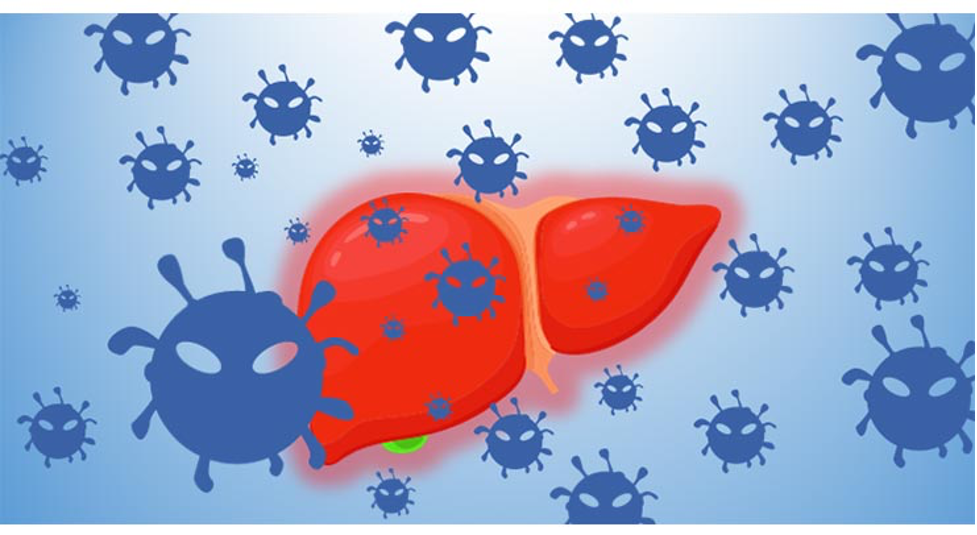
Hepatitis refers to an inflammatory condition of the liver. It is commonly the result of infection with the hepatitis virus although there are other possible causes of hepatitis such as alcohol or even medications.

There are five major known strains of the hepatitis virus namely Hapatitis A, B, C, D and E. While they all cause liver disease of varying severity, they differ in important ways including modes of transmission and prevention. However, Hepatitis B and C are the most virulent strains because chronic infections are known to cause liver cirrhosis and liver cancer*. In this article, we focus on the mode of transmission, symptoms and prevention of  Hepatitis B.

Mode of Transmission

Hepatitis B Virus infection could be easily contracted through:

  1. Contact with blood or wound exudate of an infected individual (high infectivity)
  2. Semen, vaginal fluid, and saliva of an already infected person (moderate infectivity)
  3. Urine, feces, sweat, tears, or breast milk of someone infected with the virus (low infectivity)

Symptoms of Hepatitis B Infection

Infection with hepatitis B virus any not present with any symptoms. Otherwise, infected individuals may present with non-specific symptoms such as:

  1. Extreme Fatigue
  2. Fever
  3. Nausea and vomiting
  4. Abdominal pain
  5. Pale stool
  6. Weight loss
  7. Dark Urine
  8. Yellow discoloration of the eyes and skin (Jaundice)

Prevention of Hepatitis B Infection

Hepatitis B virus is one of the infections that is preventable through vaccination. So, it is important to get vaccinated to avoid infection. Also, sharing of sharps should be avoided as well as abstinence or use of condoms during sexual activity.

Hepatitis B infection can be acute (if it lasts for less than six months) or chronic (if it lasts more than six months). Chronic hepatitis B increases your risk of developing liver failure, liver cancer or cirrhosis.